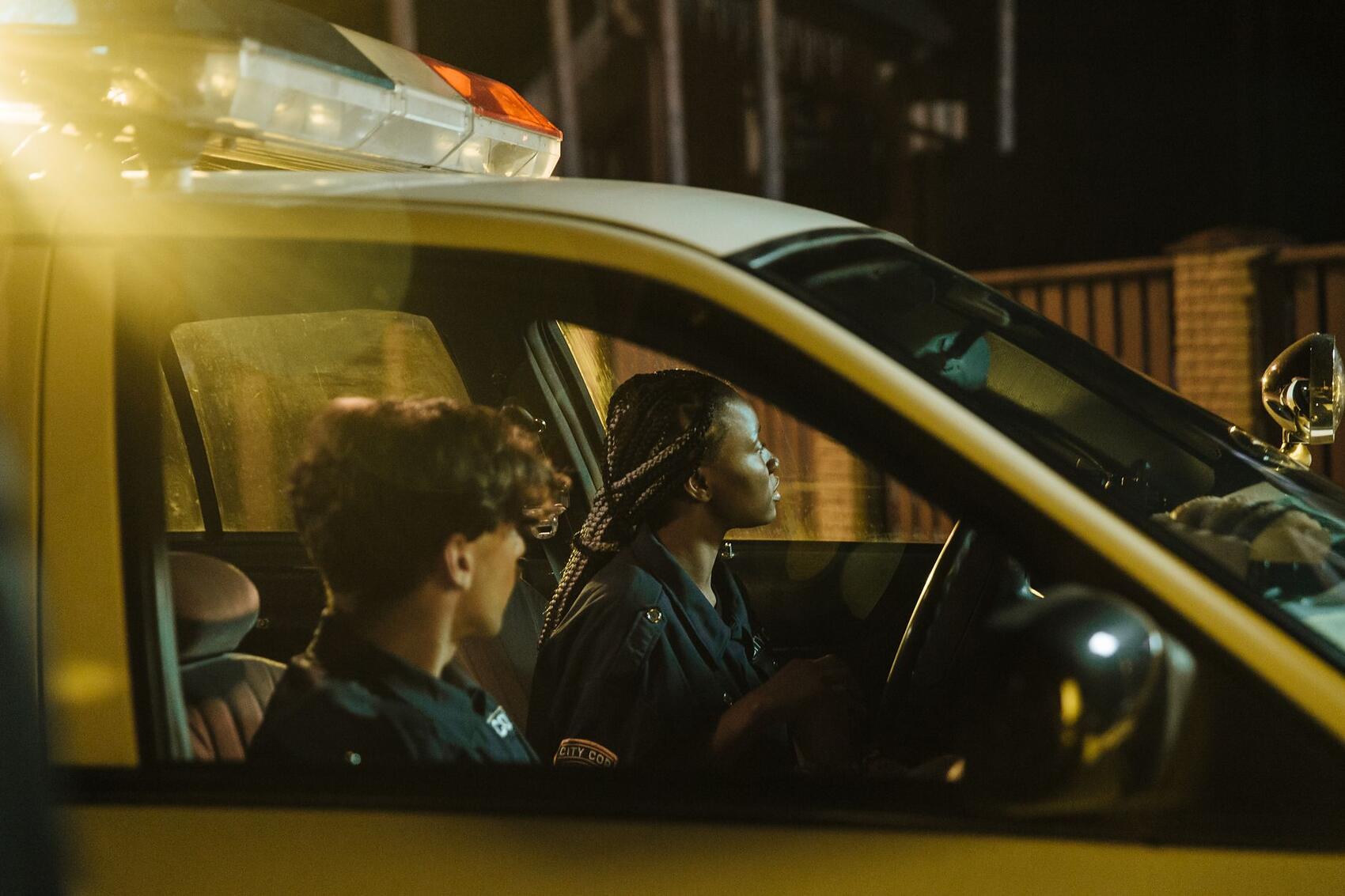
Neighborhood Vehicle Patrol in Orlando Communities
Nexus Security Firm runs marked vehicle patrols through Orlando homeowner and condominium communities on schedules the board sets, with each check logged and the log sent to the association. Officers are licensed under Florida Chapter 493 and the agency license is B 1900066.
What a patrol check consists of
A patrol check is a marked vehicle entering the community at a scheduled or randomized time, covering an agreed route, and recording what the officer found. The board decides the route and the stops, and the difference between a cheap patrol and a useful one is entirely in that specification.
A thin check is a vehicle driving the main loop and leaving, perhaps eight minutes. A substantial check has the officer park, walk the pool deck and clubhouse doors, check the mail kiosk and the tot lot, look down the rows in the overflow lot for open car doors and broken glass, test the pedestrian gates, and write up anything found. That second version costs several times the first and is the one worth buying. Boards should also decide whether the officer knocks on a door, how a loud gathering at a rental house gets handled, and whether checks include a pass down the construction phase if the community is still building.
Put a number in front of the board before the vote
A staffed post is usually the largest line an association ever adds, and owners will ask what it costs per home. Five questions gives you the annual figure to take to the board.
Based on Florida guard wages (ZipRecruiter, Salary.com, Indeed, 2026) with the industry markup of 1.5x to 2x (Belfry Software, 2026). A written proposal for the board carries firm figures.
Which communities get the most from patrol
Patrol fits the community whose problems are spread across the property rather than concentrated at the entrance. Open or partially gated neighborhoods, communities with long back loops and conservation frontage, and associations whose incidents are vehicle burglaries in driveways all get more from a moving officer than from a booth.
It also fits the board that cannot fund a post and has been told the only options are a staffed gate or nothing. A patrol gives the community a documented presence, a record of conditions, and a number an owner can live with. The communities where patrol underdelivers are the ones with a single controlled entrance and incidents tied to who gets admitted, because a vehicle passing through three times a night does nothing about a guest list. That is a gate problem and we will say so.
Patrol pricing and the one factor that moves it most
Patrol is quoted per check and presented as a monthly figure, because that is the form a budget uses. Operators in this industry price quick drive by checks around $8 to $15 each, and a substantial check with the officer out of the vehicle at closer to $55, with the most involved checks reaching $100. Three substantial checks a night across a month is about 90 checks, which lands near the high four figures monthly. The same cadence of quick drive bys lands closer to $1,000 a month.
Route density is the factor that moves patrol pricing more than anything else. An officer covering four communities within a few miles spreads the cost of the vehicle, the fuel and the shift across four clients, so a community sitting near others we already serve prices better than an isolated one. This is worth asking every bidder directly: ask who else they cover nearby and on what nights. It is also why a patrol quote can drop when a neighboring association signs.
Set against a staffed post, the comparison is stark. A 24 hour gate post runs about $17,500 to $24,750 a month at $24 to $34 an hour, which is several times a substantial patrol program.
Patrol officers work unarmed in a marked vehicle
Residential patrol is unarmed work in this market and should be. The officer is there to be seen, to check conditions and to document, and arming should follow the risk a post carries. Working officers themselves are markedly less enthusiastic about carrying on low risk residential sites than security marketing implies.
Officers hold Florida Class D licenses, which require 40 hours of FDACS-approved training and are valid two years (FDACS Division of Licensing). Vehicles are marked, because an unmarked car achieves none of the deterrence the association is buying. A supervisor is assigned to the patrol route and attends it, including overnight, which is the mechanism that keeps a 2am check from becoming a drive past the entrance sign.
What patrol will and will not change
Patrol reduces the casual, opportunistic end of the problem and documents the rest. Vehicle burglaries in Central Florida communities are overwhelmingly a matter of unlocked cars worked quickly on foot, and a marked vehicle appearing on an unpredictable schedule makes that harder. Conditions get caught early: a propped pool gate, a dead light pole, a trailer parked where it should not be, a door left open at the clubhouse.
What patrol does not do is put an officer where an incident happens at the moment it happens. A contractor on one job site had a job box broken into while security was on the property, which is the plain lesson that coverage only helps where the patrol reaches. Boards should also hear the other half of the advice associations give each other: lighting the dark stretches and getting residents to lock their vehicles usually moves the incident count before any paid coverage does, and both are cheaper.
Orlando conditions that shape a patrol route
Central Florida community layouts create specific weak points a route has to name. Conservation and retention pond frontage gives long stretches of dark boundary with no houses facing it. Communities built in phases leave an active construction area inside the walls, which brings vehicles and material worth stealing. Amenity centers sit at the front of the property where the parking lot serves anyone who drives in.
Weather changes the job twice a year. Hurricane season brings weeks of contractor, adjuster and tree crew traffic through communities, and a patrol log becomes the only record of who was working where. Summer afternoon storms push officers to shift check times, which is one more reason a route should be specified by coverage rather than by an exact clock time an outsider could learn.
Verifying the agency before you sign a patrol contract
Nexus Security Firm holds FDACS Class B agency license B 1900066. The Florida Department of Agriculture and Consumer Services runs a public license search, and a board member can confirm the agency and its status from a phone in under a minute.
Do the same with every bidder. Patrol is the easiest security service to sell badly, because a board rarely sees the officer and can only verify the work through logs. An agency that will not hand over its license number, will not say who supervises the route, and will not commit to sending the check log to the association is telling a board how the contract will go.
What boards usually pair this with
Associations that buy this usually look at these at the same board meeting.
Setting up a patrol program
The route gets designed around the incidents the community is having, then priced in the form a treasurer can put in a budget.
-
Tell us what has been happening and where
Dates, locations and types. Car break ins in driveways, damage at the tot lot and after hours pool use are three different routes. If the manager has a log or a stack of resident emails, that is the raw material.
-
We drive the community after dark
We look at the boundary, the lighting, the parking areas, the amenity buildings and the pedestrian gates, at the hour the complaints are about. Everything worth fixing that costs nothing goes in the notes.
-
You get a route, a cadence and a monthly figure
Number of checks a night, what happens on each check, and the monthly cost, alongside a cheaper cadence and a fuller one so the board can see the shape of the trade.
-
Patrol starts and the logs come to the association
Each check is recorded with time, route covered and findings. The board sets a review point, usually six months, and the logs are what that review is argued from.
Why boards choose Nexus Security Firm for patrol
You can see what you bought
Patrol is invisible work, so the log is the product. Every check comes back with a time, the route covered and what the officer found, and incidents are documented and sent to the association. Boards that have been burned before ask for this specifically, because a vendor whose reporting lives on its own servers can describe a level of service the community has no way to test.
Missing incident documentation is the pain property managers name most often, and it is the record a fining committee needs.
Route density is priced in your favor where it exists
The cost of a patrol shift is spread across the communities on the route, so a board sitting near others we already cover gets a better number, and we will tell you which side of that you are on. Boards trade this advice among themselves: find a company already working nearby and ask what it does for the price.
Industry patrol pricing runs from $8 to $15 for a quick drive by check to around $55 for a substantial one.
We price the cheaper thing first
Most boards calling about patrol have been quoted a staffed post and cannot fund it. Patrol frequently addresses the actual complaint for a fraction of the cost, and in some communities the answer is lighting before either. All three end up in the same document with figures attached, and the board chooses with the numbers in front of it.
A 24 hour post runs about $17,500 to $24,750 a month at $24 to $34 an hour, several times a substantial patrol program.
What Reddit Says About Neighborhood Vehicle Patrol in Orlando
Operators discuss patrol pricing openly, which is useful for a board about to receive three quotes. Quick drive by checks get quoted at $8 to $15 each, while $55 a check with three checks a night is described as competitive, and a really substantial check reaches $100. The advice on the vendor side is to present it to a client as a monthly figure, so a board asking for a per check breakdown is doing the right thing.
Route density comes up as the cost driver every time, with buyers telling each other to find a company already servicing buildings nearby. On the residential side, boards weighing patrol against cameras report persistent skepticism about camera spending as reassurance in a low crime community, and one board reported its own attorney advising against association owned cameras. The recommendation boards land on first is lighting, then getting residents to lock their vehicles.
The caution worth carrying into a contract came from a contractor whose job box was broken into while security was on site: coverage only helps where the patrol reaches. Ask a bidder what the officer does on a check, how long it takes, and who verifies it happened.
A typical patrol program in a Central Florida community
The situation: A common call from a 220 home community in Seminole County with an open entrance and a long back loop against a conservation strip. Over three months, eleven vehicle burglaries, all overnight, all unlocked cars in driveways, plus a pool gate found propped open repeatedly and two dumped shopping carts at the mail kiosk. The board has a quote for a staffed gate that would consume most of the reserve contribution.
What gets done: We drive the community at 11pm and again at 3am. Four light poles on the back loop are out, the pedestrian gate at the conservation path does not latch, and the driveways where cars were hit sit in the darkest section. We write that down and quote three substantial checks a night as a monthly figure, with a two check cadence beside it and the gate post figure for comparison. The lighting repairs and the gate latch go on the list ahead of all of it.
How it turns out: The board repairs the lighting and the latch, contracts two checks a night on a randomized schedule, and reviews at six months with the check logs in the packet. The log also catches the propped pool gate three times in the first month, which turns out to be a resident with a wedge, and the fining committee finally has dates to work from.
Patrol questions Orlando boards ask
Pricing and cadence first, then what the officer does on a check and what the association receives.